Google Review Request Scripts That Actually Work (Without Breaking Google’s Rules)
Most businesses don’t struggle because they don’t ask for reviews — they struggle because they ask inconsistently, at the wrong time, or with the wrong message.
That’s why so many review request scripts don’t work.
You can copy the perfect wording, follow a template, and still get no response.
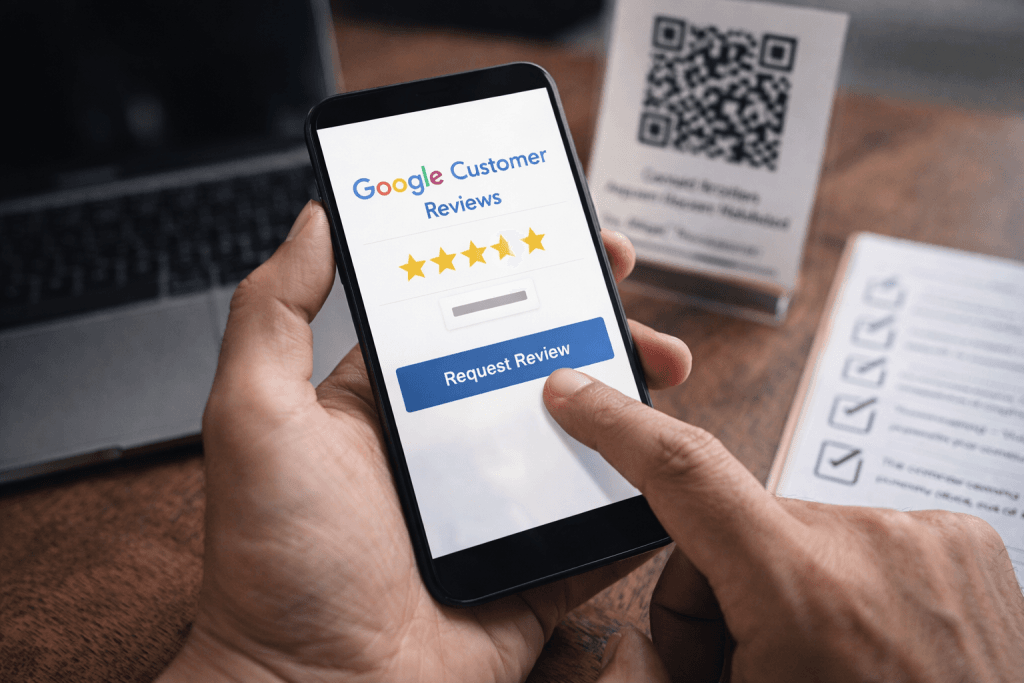
In this guide, we’ll break down what actually works:
- real review request message examples
- when to send them
- what Google allows (and doesn’t)
- and why scripts alone aren’t enough to scale reviews consistently
If you haven’t read the full strategy yet, start with our guide:
👉 How to Get More Google Reviews: The Complete No-BS Guide for Small Businesses (2025)
Why Asking for Reviews Manually Fails
Most businesses rely on memory.
They assume:
- staff will remember to ask
- customers will follow through
- a quick “leave us a review” is enough
It isn’t.
The 3 biggest problems:
1. It’s inconsistent
Some customers get asked, most don’t.
2. Timing is off
Requests come too late — when the experience has faded.
3. The message is weak
Generic requests get ignored.
This is why even good google review request script examples fail in practice.
👉 The issue isn’t just wording — it’s the process behind it.
Examples of Review Request Scripts That Actually Work
Let’s look at simple, practical review request message examples you can use immediately.
Example 1: SMS (Best performing)
“Hi [Name], thanks again for choosing us today — really appreciate it.
If you have a moment, we’d love your feedback here: [link]”
Why it works:
- personal
- sent at the right time
- low friction
Example 2: Post-service follow-up
“Hi [Name], glad we could help with [job/service].
If everything’s good, would you mind leaving a quick Google review?
Here’s the link: [link] — it really helps us.”
Why it works:
- context-specific
- reinforces positive experience
- clear ask
Example 3: Email (only if done right)
Subject: Quick favour
Hi [Name],
Thanks again for working with us.
If you’re happy with the service, we’d really appreciate a quick review here: [link]Thanks so much,
[Business Name]
Why it works (sometimes):
- simple
- direct
Why it often fails:
- low open rates
- gets buried
Mistakes to avoid
❌ “Please leave us a 5-star review”
❌ Overly long messages
❌ Sending days or weeks later
❌ No direct link
If you want ready-to-use templates + QR codes, you can preview them here:
When to Send Review Requests (This Matters More Than Wording)
You can have perfect review request wording… and still fail if timing is wrong.
Best time to ask:
👉 Immediately after a positive experience
Examples:
- right after a job is completed
- right after payment
- right after a successful interaction
Worst times:
- days later
- in bulk at the end of the week
- randomly when someone remembers
Simple timing checklist:
✅ Customer is satisfied
✅ Experience is fresh
✅ You can send instantly
✅ Link is ready
👉 This is where most businesses lose reviews — not because of bad scripts, but bad timing.
What Google Allows vs Bans
Before using any ask for google review template, you need to understand Google’s policy.
What’s allowed:
✅ Asking all customers for reviews
✅ Sending direct review links
✅ Using templates or scripts
✅ Automating requests (if done fairly)
What’s NOT allowed:
❌ Incentivising reviews (discounts, gifts, rewards)
❌ Asking only happy customers (review gating)
❌ Writing fake reviews
❌ Filtering negative feedback before Google
Key takeaway:
You can use review request scripts safely — as long as:
- you ask everyone
- you don’t manipulate feedback
- you keep it honest
Why Scripts Alone Don’t Scale
Here’s the part most people miss.
Even the best review request scripts won’t fix your review problem if:
- no one sends them consistently
- staff forget
- there’s no process
This is the “system gap”
Businesses think:
👉 “We need better wording”
But the real issue is:
👉 “We don’t have a system”
What happens without a system:
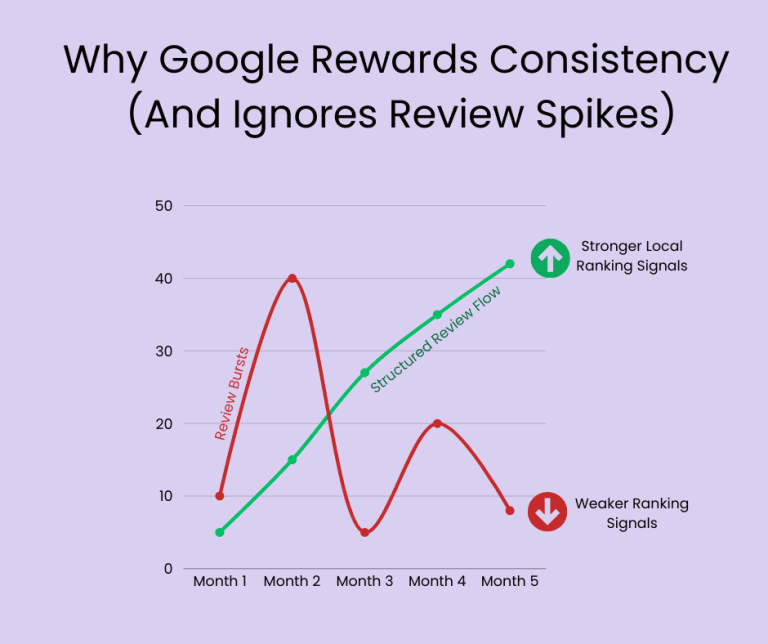
- reviews come in bursts
- then drop off
- rankings fluctuate
- growth stalls
Reality:
Scripts help…
But systems create consistency.
How Review Systems Solve It
A proper review system removes guesswork.
Instead of relying on people:
👉 it builds the process into your workflow
A simple review system includes:
- automatic request triggers
- pre-written scripts
- direct review links
- optional QR codes
- consistent timing
Result:
- more reviews
- more consistent flow
- less effort
If you want a simple way to implement this without overcomplicating things:
👉 Start with a Free Review Check
Or explore templates + scripts here: 👉 https://missklocal.com/google-review-toolkit/
Common Mistakes to Avoid
Before you go, here’s a quick checklist:
❌ Don’t:
- rely on memory
- send generic messages
- delay requests
- overcomplicate scripts
✅ Do:
- keep messages simple
- send immediately
- use a repeatable process
- track consistency
FAQ: Review Request Scripts
Do review request scripts actually work?
Yes — but only when used consistently and at the right time. Scripts alone won’t fix a broken process.
What is the best review request message?
Short, personal, and sent immediately after a positive experience performs best.
Can I automate review requests?
Yes — as long as you follow Google’s guidelines and don’t filter or incentivise reviews.
Is SMS better than email?
In most cases, yes. SMS has higher open rates and faster response times.
How often should I ask for reviews?
Every customer should be asked — consistently, not occasionally.
Final Thought
Most businesses don’t need better review request scripts.
They need:
- better timing
- better consistency
- and a simple system
Once those are in place, even basic scripts start working.
If you want to see where your current process is breaking down:
👉 Start with a free check here:
https://missklocal.com/free-review-check/
If you’d prefer a ready-to-use setup with templates, scripts, and QR codes:
👉 https://missklocal.com/google-review-toolkit/
Is Your Google Profile Losing Visibility?
If your Google reviews have slowed down or your profile isn’t appearing as often in search, the first step is understanding what’s actually happening.
I offer a one-time personalised audit showing:
• what’s limiting your ranking
• what Google is actually looking at
• what to fix first
Once you know where the gaps are, improving the process becomes much easier.
(Limited to 5 businesses per week)