How Long Does Local SEO Take? Realistic Timelines for Small Businesses
The frustration nobody warns you about
One of the most common questions I hear from small business owners is: how long does local SEO take?
You’ve updated your website, claimed your Google Business Profile, maybe even asked a few customers for reviews — and then… nothing seems to happen. No sudden spike in calls. No instant Map Pack domination.
That silence doesn’t mean it’s not working. It usually means you’re still inside the normal local SEO timeline — and your expectations may not have been set properly.
This article explains what realistic progress looks like, why local SEO takes time, and how to tell the difference between “slow but healthy” and “something is wrong.”
Why local SEO doesn’t work instantly
Local SEO is not an ad. You’re not buying visibility — you’re earning trust.
When someone searches “electrician near me” or “dentist in [suburb],” Google has to decide which businesses deserve to be shown. That decision is based on signals that accumulate over time, not overnight changes.
Key reasons local SEO takes time:
- Google needs consistent data over weeks and months
- Trust signals (reviews, engagement, citations) grow gradually
- Competition varies massively by suburb and industry
- Your history matters more than one-off actions
This is why anyone promising “top rankings in 7 days” is either running ads, cutting corners, or setting you up for disappointment.
How long does local SEO take in practice?
Let’s answer the question directly: how long does local SEO take?
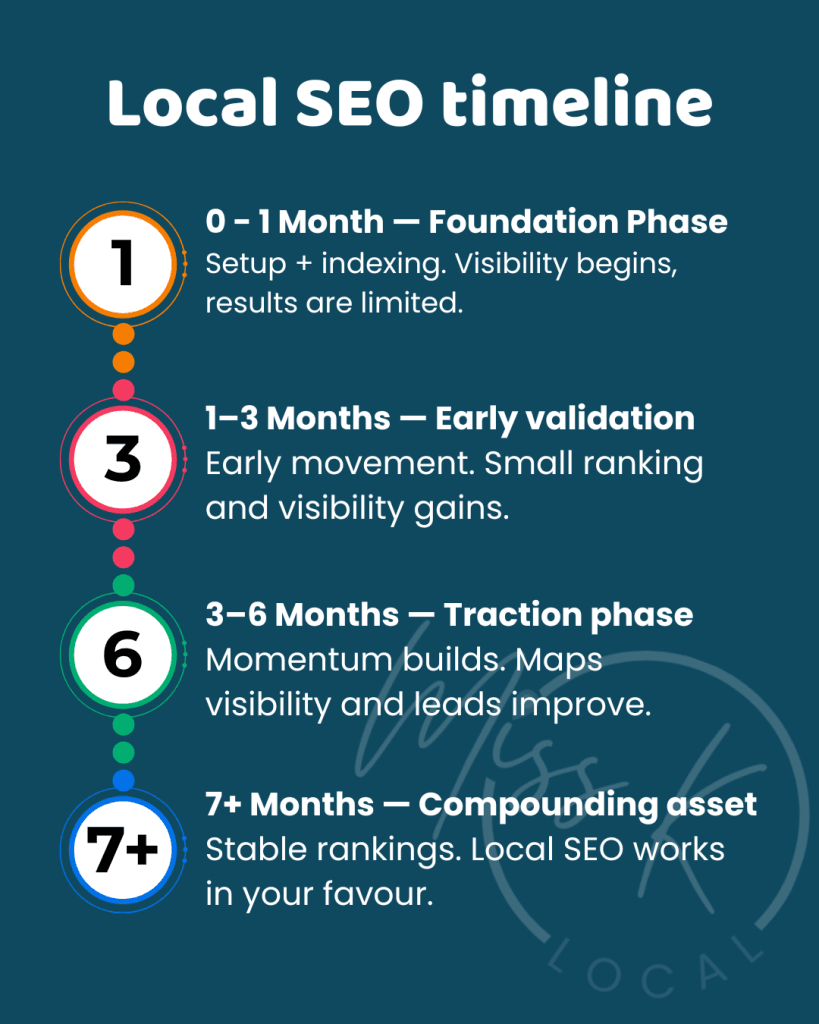
For most legitimate small businesses, this is the normal local SEO timeline:
Month 0–1: Foundation & cleanup
This phase is invisible but critical.
What’s happening behind the scenes:
- Google Business Profile accuracy is corrected
- Categories, services, and service areas are aligned
- Website and GBP are properly connected
- Obvious trust gaps are removed
What you might notice:
- Very little movement
- Occasional impression increases in Google Search Console
This is normal.
Month 2–3: Early signals & soft movement
This is when Google starts testing your business.
You may see:
- More profile views
- More direction requests
- Slight ranking improvements in non-competitive suburbs
Still no flood of leads — but momentum is building.
Month 3–6: Measurable local traction
This is where consistent effort starts paying off.
Typical outcomes:
- Stronger Maps visibility in your core service area
- More branded searches (people searching your business name)
- Reviews having a noticeable impact on rankings
For many businesses, this is when local SEO “clicks.”
Month 6+: Compounding advantage
At this point, your local SEO becomes an asset.
You’re now benefiting from:
- Review velocity (not just review count)
- Aged trust signals
- Ongoing engagement data
Competitors who start today are now behind you.
What affects your local SEO timeline the most
Not all businesses follow the same pace. Google has consistently stated that local search visibility is influenced by relevance, distance, and prominence — signals that build over time rather than appearing instantly. According to Google’s own guidance, consistent business information, engagement, and reviews all contribute to how local results are surfaced.
These factors matter more than most people realise:
1. Competition in your area
Ranking in a quiet regional suburb is very different from ranking in a capital-city metro area.
More competitors = longer timeline.
2. Your review activity
A business with:
- 2 reviews from 2019
vs - 30 recent, legitimate reviews
…will move at very different speeds.
This is why review systems matter more than most “SEO tricks.”
3. Consistency (or lack of it)
Local SEO rewards boring consistency, not bursts of effort.
One good month followed by silence will slow progress dramatically.
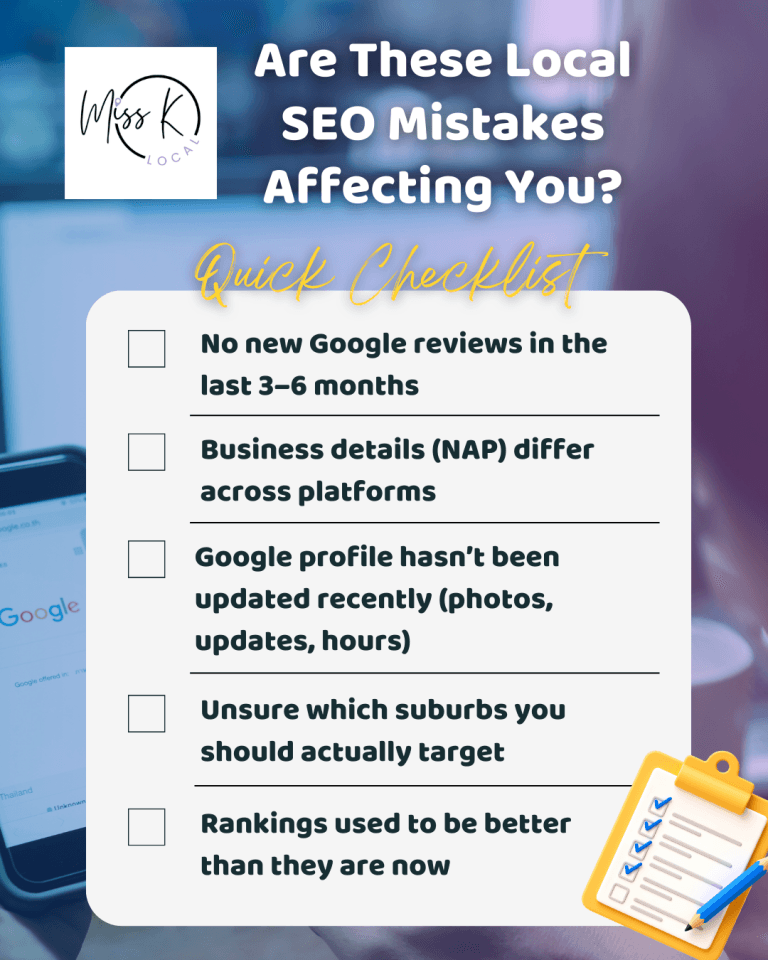
A simple “is this normal?” checklist
Use this quick check to sanity-check your progress:
- Are impressions slowly increasing?
- Are profile views trending up month-to-month?
- Are reviews coming in at least occasionally?
- Are you visible in some suburbs, even if not all?
If yes — you’re likely right on track.
Where most small businesses need help
In almost every case, the sticking point isn’t effort — it’s systems.
That’s why Miss K Local focuses on removing the manual grind:
- Google Maps Ranking Playbook (free)
- DIY Google Review App – for businesses who want control and automation in their review process
- Reputation Management Plans (Done For You) – for businesses that need extra help
If reviews and trust signals are handled properly, the rest of local SEO becomes much easier — and faster.
How this fits into the bigger local SEO picture
This article focuses on timing, not tactics.
For the full framework — including:
- Ranking factors
- Website vs Maps roles
- Ongoing maintenance
Read The Complete Guide to Local SEO for Small Businesses (2025)
How long does local SEO take to see results?
Most businesses see early movement in 2–3 months, with meaningful results around 3–6 months. Faster or slower depends on competition and consistency.
Can local SEO work without reviews?
It can — but it will be slower and less stable. Reviews act as trust accelerators.
Is local SEO still worth it in 2025?
Yes. Especially for service-based businesses where Google Maps drives high-intent leads without paying per click.
Can local SEO help future-proof my business against AI changes?
Local SEO is one of the most future-resistant marketing strategies because it’s built on real-world signals such as Physical location, Legitimate customer interactions, Verified business activity.
While algorithms evolve, Google still needs reliable ways to recommend real local businesses. Businesses with consistent Maps visibility, reviews, and engagement are far more resilient as AI search expands.
Final word
If you’ve been wondering how long does local SEO take, the honest answer is: long enough to build real trust — and that’s exactly why it works.
Quiet progress beats quick spikes every time.