Why Google Reviews Stall (And How to Fix It Simply)
If you’ve noticed Google reviews slowing down — or stopping altogether — you’re not alone.
This is one of the most common issues service businesses run into, especially once things get busy. It’s rarely because customers don’t want to leave reviews. More often, it’s because the process becomes inconsistent, awkward, or easy to forget over time.
You can implement everything in this guide easily yourself, and it covers:
- why Google reviews commonly stall
- what Google actually looks for when ranking businesses
- a few simple ways to keep reviews coming in consistently — without chasing
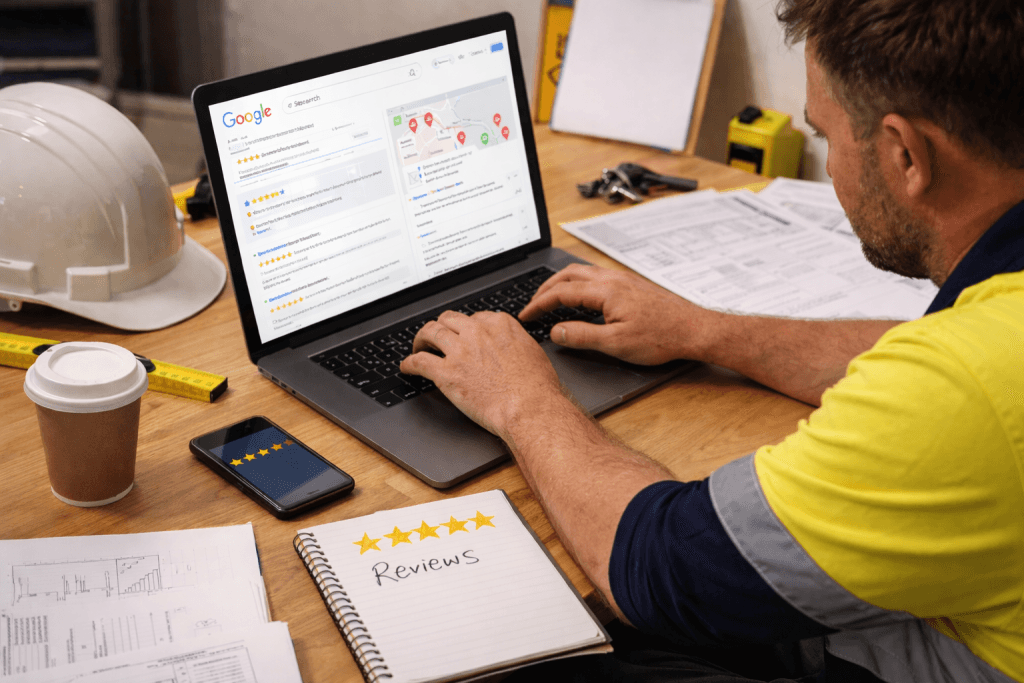


Why Google Reviews Often Stall
Most businesses don’t do anything “wrong” — reviews usually slow down for very normal reasons.
Common ones include:
- Reviews are only asked for once, and then forgotten
- Timing is off (asked too early or too late)
- Staff ask inconsistently, or not at all
- Customers intend to leave a review but get distracted
- There’s no follow-up if the first request is missed
When reviews rely on memory or manual effort, consistency is usually the first thing to go.
What Google Actually Looks For (The Simple Version)
You don’t need to understand algorithms to understand this part.
From a practical point of view, Google cares most about:
- Recency – Recent reviews signal that a business is active and relevant.
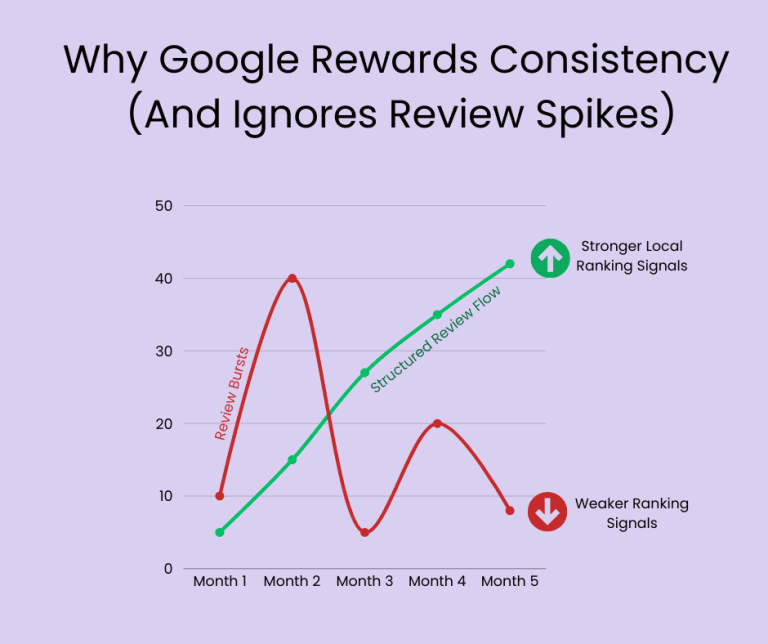
- Consistency – A steady flow over time matters more than bursts.
- Volume over time – Ten reviews spread out beats ten reviews in one week.
- Engagement – Businesses that respond to reviews tend to perform better in Maps.
If reviews slow down or stop, your visibility in Google Maps can quietly drop without you realising — even if everything else stays the same.
5 Simple Ways to Keep Reviews Coming In
These are small changes that make a big difference.
1. Ask at the right time
The best moment is usually just after a job is completed or a service is delivered — when the experience is fresh and positive.
2. Remove friction
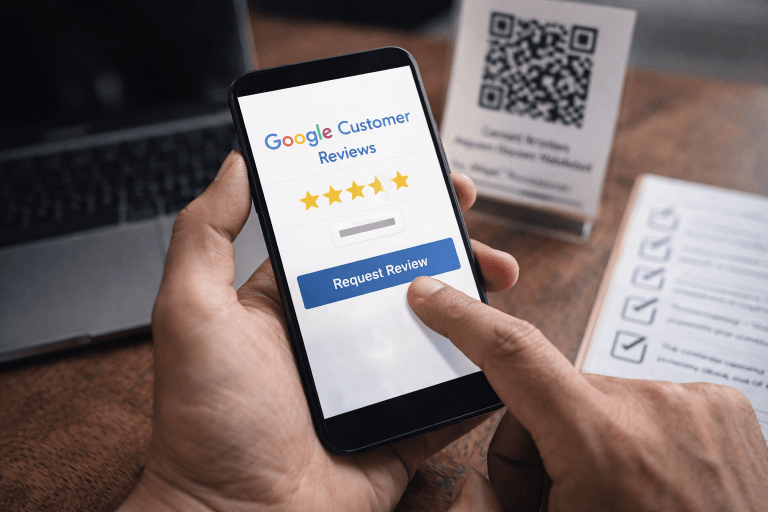
Make it easy. A direct link or QR code is far more effective than asking customers to “search you on Google”.
3. Use natural wording
Polite, normal language works better than scripted or pushy requests.
4. Follow up once
A single gentle reminder catches people who meant to leave a review but forgot. More than that usually isn’t necessary.
5. Build a simple system
Reviews work best when they’re part of a repeatable process, not something you remember when things slow down.
None of this is complicated — but it does need to be consistent.
If you find this helpful this article goes into more detail: How to Get More Google Reviews: The Complete No-BS Guide for Small Businesses (2025)
DIY, Semi-Automated, or Done-For-You?
There’s no single “right” way to handle reviews. Most businesses fall into one of these three approaches.
DIY (manual)
You ask personally, send links yourself, and keep track mentally.
This works if you have time and remember to do it consistently.
Semi-automated
Templates, reminders, or simple automation help take the manual chasing out of the process while keeping things personal.
Done-for-you
The review process is handled for you — including setup, timing, and responses — so it doesn’t become another admin task.
All three can work. The difference is how much time and mental load you want it to take.
If You Want to Take the Next Step
If you’d like to go further, here are some options from Miss K Local depending on how hands-on you want to be:
- DIY system: Review Booster Toolkit — templates, scripts, timing guidance, and setup steps you can use yourself.
- Automated setup: DIY Review Automation App & Setup — for businesses that want consistency without manual follow-ups.
- Done-for-you: Google Business Profile Optimisation & Review Management — if you’d rather take this off your plate entirely.
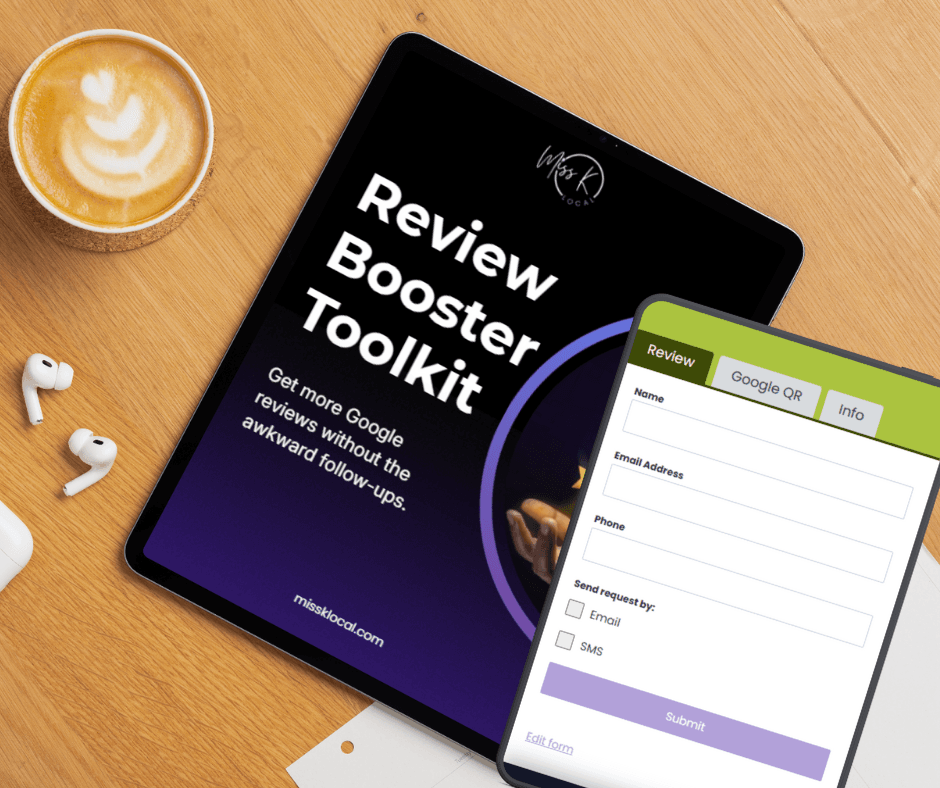
There’s no obligation to choose any of these. Many businesses simply use the tips above and start there.
Reviews Are Only One Part of Google Maps Visibility
Google reviews play a big role in Maps rankings, but they’re not the only factor.
Profile completeness, categories, service areas, photos, posting activity, and overall engagement all contribute to how often your business shows up in local results.
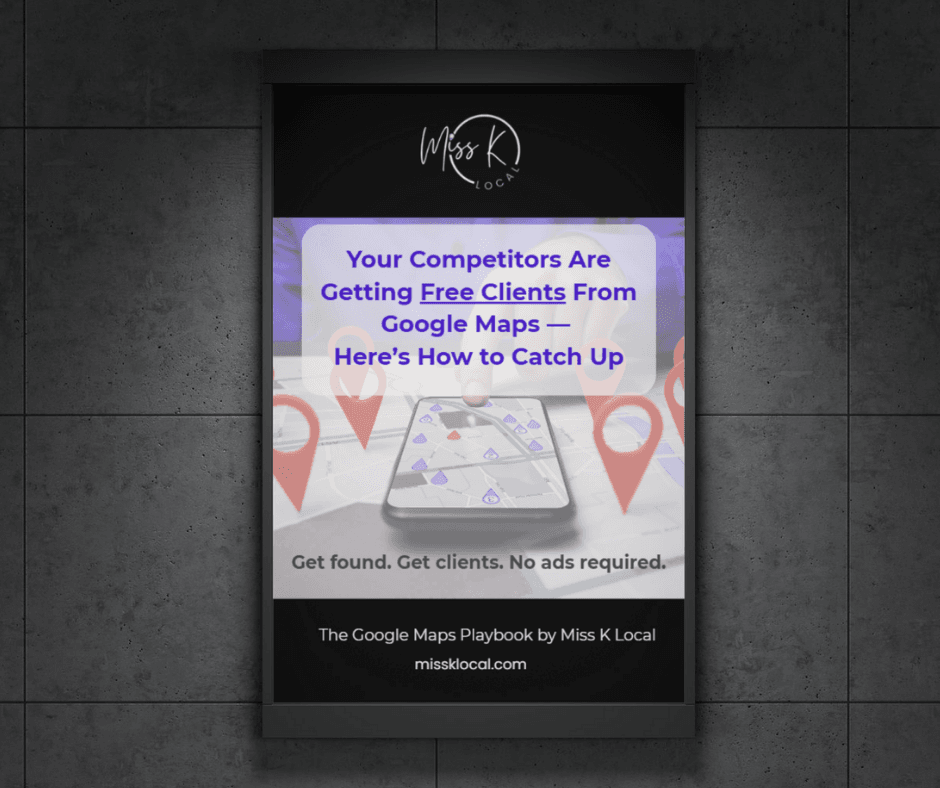
If you’d like a broader, plain-English overview of how Google Maps rankings work beyond reviews, you can read the free Google Maps Ranking Playbook.
This is optional reading. Many businesses focus on reviews first, then expand from there when they’re ready.
Final Thought
Start small. Stay consistent.
Your customers usually want to support you — they just need a clear, easy way to do it.
If reviews have felt awkward, inconsistent, or easy to forget, that’s normal. The fix is usually simpler than it looks.
—
Miss K Local